People often look for a "fast first aid course" or "express cpr course" at the precise minute life is currently hectic and difficult. A new work is starting, a childcare duty requires immediate conformity, or a sporting activities club requires somebody qualified before the weekend break. On paper, fast certification seems best. In practice, it can be either a smart, effective option or a dangerous shortcut.
I have actually shown first aid and cpr courses to parents, tradies, childcare teachers, registered nurses, and office personnel for several years. I have actually also enjoyed what happens months later, when something really goes wrong and somebody collapses in a play area or on a. That is when you see extremely clearly which type of training leaves people calm and competent, and which kind leaves them standing iced up, certificate in hand yet no actual concept what to do.
This post unpacks the reality behind "fast first aid" and "express first aid training" so you can obtain the efficiency you need without giving up the skills you are depending on.

Why numerous people go after fast certification
Most people are not attempting to cut edges on safety and security. They are trying to fit compulsory training into express first aid Caboolture their lives. The motivations I listen to are usually very reasonable.
A new childcare employee needs an express child care first aid course due to the fact that the solution can not lineup them without a valid first aid certificate. A building and construction supervisor wants a fast first aid training session so the site stays compliant when the existing initial aider takes place leave. A parent register for an express cpr course after a scare with a choking youngster, determined yet also managing shift job and family.
Time stress is real. Employers often set limited deadlines. Expert enrollments require proof of present first aid and cpr training classes before revival. Add traveling time to a training place and losing a complete day's pay, and the charm of fast cpr courses or an online express first aid course is obvious.
Speed, by itself, is not the adversary. The issue is when "fast" ends up being the primary marketing factor, and real competence comes to be an afterthought.
What "fast" generally indicates in first aid and CPR courses
When you see marketing terms like fast first aid course, express cpr training, or one‑hour first aid and cpr course, they can suggest several various points:
The theory part is relocated online. The course presumes anticipation and is structured as a real refresher. Content is heavily trimmed. Assessment is superficial.The first two can function well. The last two are where difficulty starts.
Blended learning is the most reputable version of fast certification. Individuals full online first aid training modules or cpr training concept in advance, then participate in a much shorter in‑person session focused on abilities practice, scenarios, and assessment. When done effectively, this can cut class time virtually in half without minimizing finding out quality. For active people or companies trying to schedule team, this is truly helpful.
On the other hand, I have examined "express first aid courses" where the online material was a handful of slides and a 10‑question quiz, followed by a very brief useful session with very little feedback. The certificate looked similar to those from extensive first aid courses, however the skill degree was not also close.
"Fast" is not a standardised term. One company's fast cpr refresher course might be an effective modification session for already competent team. Another's fast cpr course might be absolutely nothing more than a presentation that you enjoy, with no hands‑on operate at all. You need to look past words and examine what is in fact delivered.
Myth vs fact: typical beliefs about fast first aid courses
Misconceptions regarding express first aid training appear in every class I instruct. A few of them are safe. Some are dangerous. It helps to tackle them head on.
Here is a small contrast of some misconceptions and the truth behind them.
Myth: "If the course is approved, the rate does not matter."
Truth: Certification sets minimal results, not exactly how completely they are shown or exercised. Two recognized first aid and cpr courses can really feel completely various detailed and intensity.Myth: "I can discover first aid from video clips equally as well as personally."
Reality: Video clips are outstanding intros. They are bad substitutes for somebody remedying your hand placement on the breast of a manikin or training you through the panic of a substitute emergency.Myth: "Fast first aid courses are only for people that already recognize what they are doing."
Truth: Some are real refresher courses, but others are marketed to newbies for benefit. New students in an extremely pressed class have a tendency to keep in mind fragments, not a meaningful response.Myth: "Once I have the first aid certificate, I am established for many years."
Reality: Skills discolor. When I run cpr training for individuals two or 3 years after their last course, lots of can not remember compression depth or the proportion of compressions to breaths up until we practice again. 
Myth: "Fewer hours indicates the fitness instructor is extra reliable and knowledgeable."
Reality: There is a distinction between eliminating fluff and removing method. Performance should come from emphasis, not by skipping vital drills.Whenever you see fast first aid, fast cpr, or express cpr courses advertised, ask which of these misconceptions the advertising and marketing is relying upon. That straightforward mental check currently puts you in advance of lots of buyers.
How long top quality first aid and CPR training in fact takes
People frequently ask me, "The amount of hours do I actually need?" They hear stories of someone doing first aid and cpr training in under 2 hours and ask yourself if a full‑day first aid course is unnecessary.
The sincere solution is that the moment called for depends on 3 things: your previous experience, the course scope, and exactly how practical you want the training to be.
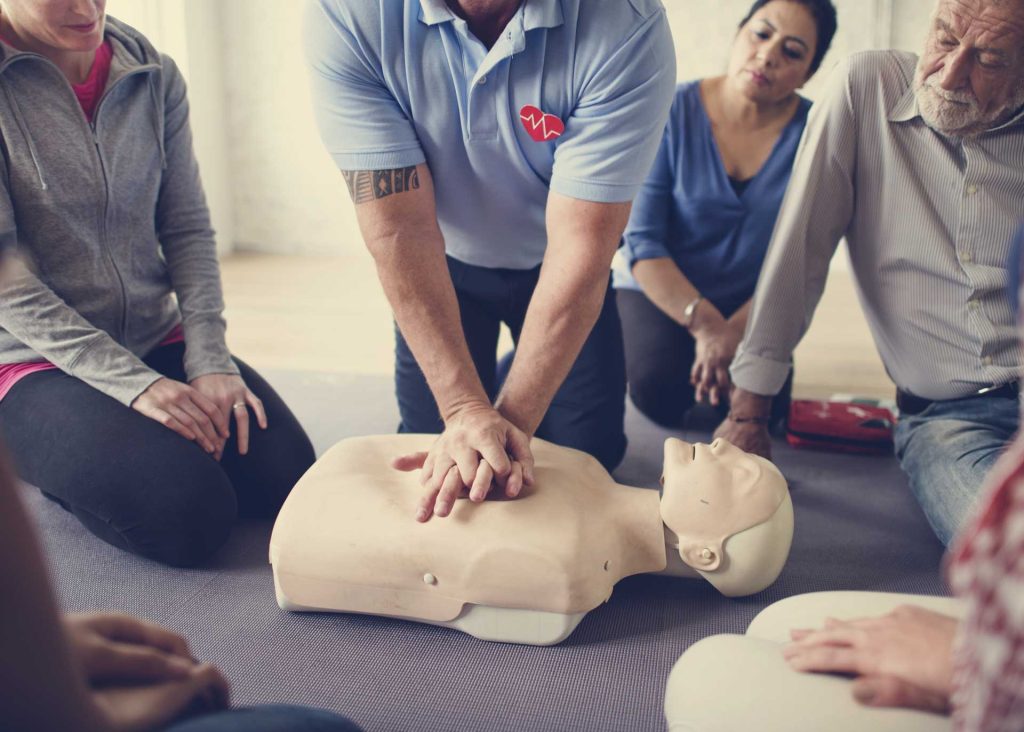
For somebody without much history, a comprehensive first aid and cpr course that covers standard life assistance, usual medical emergency situations, wounds, cracks, burns, and circumstance method typically runs around 6 to eight hours in the class, or a mixed format with numerous hours of on-line work plus 3 to 4 hours face to face. That is approximately the minimum to move from "I saw a video when" to "I can actually execute cpr and take care of a serious bleed under stress."
For cpr courses alone, a concentrated session, after some pre‑reading or e‑learning, can be finished in 90 to 120 minutes. Anything much shorter than that begins to really feel rushed, specifically for individuals that have never ever done upper body compressions on a manikin.
Childcare certain training, such as an express child care first aid course, has extra material like paediatric cpr, anaphylaxis, asthma management, and certain regulative demands. Also the express variations require sufficient time to resolve situations entailing infants and youngsters. Expect these to take longer than a basic office course.
If a provider asserts they can totally educate complete novices in first aid and cpr in an hour, with no pre‑course job, that must raise questions. Physically practicing abilities and letting them resolve in your memory takes some time. There is only a lot you can compress before high quality drops.
What can securely be compressed, and what cannot
Not every min in a typical eight‑hour course is spiritual. Good trainers recognize where they can simplify without losing value.
Theory distribution is the simplest component to compress. Standard understanding concerning the chain of survival, recognizing a stroke, or understanding just how an automated exterior defibrillator jobs can be found out through interactive online modules, short readings, or videos prior express childcare first aid Morphett Vale to the face‑to‑face element. When individuals get here already familiar with essential concepts, the course can spend much more time on technique and much less on lectures.
Administrative tasks can likewise be cut. Reliable sign‑in, pre‑filled forms, and on-line analyses minimize wasted time. A well‑organised express first aid course often really feels tighter simply due to the fact that the logistics are under control.
What can not be safely pressed is purposeful technique. Ability acquisition in first aid and cpr training relies upon repeating under slight variations. You require to execute upper body compressions enough time to feel your arms tire. You require to roll a number of different volunteers right into the recuperation position, not simply one. You need to exercise using an epinephrine auto‑injector trainer, not only enjoy it demonstrated.
Scenario based learning additionally resists compression. When we run first aid and cpr training classes with practice circumstances - a co‑worker with chest pain, an unconscious kid near a playground, a chemical sprinkle in an eye - people repeatedly say those were what "locked in" their discovering. These situations take some time, however they are where expertise turns into judgment.
If a fast first aid course or fast cpr course wants to be truly "fast" without being superficial, it needs to reduce repeating of basic concept and administrative fluff, not the hands‑on components.
Spotting red flags in "express" and "fast" courses
The marketing language for express first aid courses or fast certification can hide bad training behind glossy promises. Particular patterns repeat typically enough that they deserve enjoying for.
When all emphasis gets on rate and price, with almost no information concerning content, duration, or evaluation, that is an indication. Reputable service providers discuss what you will cover, for how long the session will certainly run, and what is expected of you prior to and during the course.
A 2nd red flag is a hefty reliance on "no‑fail" warranties. Proficient fitness instructors will sustain you to reach the needed criterion, yet they need to also be clear that you need to show abilities. If a web site boasts that every person passes each time, yet states virtually absolutely nothing about real assessment, ask how they are defining "pass."
Another problem is huge team sizes, specifically simply put courses. In an area of 30 or even more individuals with one trainer and a small number of manikins, each individual might only obtain a couple of minutes of actual cpr practice. On paper you went to cpr training. In truth you viewed others practice.
Pay interest as well to whether the supplier talks about customizing for your market. Quality express child care first aid training, for example, addresses real childcare scenarios, not common workplace injuries. An express cpr course for an office could focus on grown-up heart emergencies, while a sports club may need a lot more around trauma and back management. Cookie‑cutter "one dimension fits all" courses try to be whatever to everyone and frequently wind up thin everywhere.
How to select a fast first aid course near you
If you type "fast first aid course near me" right into a search engine, you will certainly get a congested web page of options, from nationwide brands to one‑person attires. As opposed to being swayed by whichever advertisement screams the loudest concerning rate, resolve a short checklist.
Here is an easy means to contrast express first aid or fast cpr courses side by side:
Check accreditation and recognition.
Verify the supplier is approved by a credible body in your country, which their first aid certificate is approved by your employer, regulatory authority, or market body.Look at course structure.
Favor combined options where theory is done online and classroom time is booked for practice. Be wary of courses that are totally online for first aid and cpr, with no in‑person skills assessment.Ask concerning period and group size.
Real fast first aid training still needs a number of hours for technique, particularly if teams are huge. Much shorter sessions must either target cpr refresher requires or be extremely tiny groups.Read reviews for talk about technique, not simply convenience.
Evaluations that state "fast and very easy" without mentioning hands‑on learning are less reassuring than evaluations defining realistic scenarios and practical feedback.Clarify what you have to do prior to the course.
Quality express first aid courses almost always require pre‑course reading or e‑learning. If you can merely stroll in cold for a one‑hour course that guarantees complete first aid and cpr certification, the faster ways are likely significant.Taking 10 mins to ask these concerns can be the difference between a certificate that satisfies a spread sheet and skills that in fact assist when someone is not breathing.
When fast CPR refresher courses make sense
There is a place for fast cpr correspondence course layouts. As soon as someone has developed strong foundation skills, shorter, concentrated refresher courses can be really effective.
In workplaces where team do regular drills or deal with medical concerns often, skills decline much less in between official courses. For these groups, a yearly fast cpr course of around an hour, firmly concentrated on updates and method, often functions well, specifically when paired with informal simulations during the year.
Similarly, healthcare workers or first responders that use these abilities on the job might not require complete revisits of every first aid topic. A concentrated cpr training session highlighting most current standard changes and letting them fine-tune method can be time‑efficient and relevant.
The difficulty comes when fast correspondence course are utilized as a substitute for preliminary training. Individuals that missed key principles the first time are unlikely to capture up in a pressed refresher. Companies occasionally publication "refresher" sessions for team who never ever had correct first aid training in the first place, presuming a short course is all that is required to create competent first aiders. It is not.
If you are choosing a refresher option, be honest regarding your ability degree. If you can not with confidence chat with the steps of cpr and fundamental first aid without notes, it may be better to repeat a more extensive mixed course instead of rely upon the fastest option.
Special considerations for childcare and paediatric first aid
Childcare settings are a grandfather clause, and express child care first aid courses have come to be incredibly popular. Educators are generally juggling change work, governing deadlines, and the extremely genuine requirements of youngsters with intricate medical conditions.
Paediatric emergency situations also look different from adult ones. Baby cpr requires various hand placement and deepness. Childhood ailments existing with different indication. Choking in toddlers is common and frequently happens unexpectedly throughout regular play.
For express childcare first aid training to be secure and effective, it must deliberately address these distinctions. That suggests greater than simply including words "child care" to a generic first aid course. Trainers need to be comfortable going over bronchial asthma activity plans, anaphylaxis administration, seizure security, head injuries on play areas, and the psychological management of an occurrence before other children.
In my experience, the most effective express childcare first aid courses use practical role‑plays: a kid that will certainly not wake from nap time, a youngster with a recognized allergy that begins to wheeze at lunch, or an infant discovered face down in a cot. Educators practice not simply the technological treatments however communication with associates, parents, and emergency situation services.
If you operate in childcare and are contrasting express child care first aid courses, look very closely at just how they define paediatric web content. Ask just how much time is invested in infant and child situations relative to adult ones. Fast is useful, yet just if the content actually matches your day-to-day reality.
Online only courses: where they aid and where they drop short
Purely online first aid course choices are common now. They belong, supplied expectations are clear.
For theoretical understanding or low‑risk atmospheres, online modules can introduce principles well. Somebody handling a little remote team may utilize an online first aid course as a beginning factor, after that plan later in‑person practice when feasible. Parents usually complete an on the internet cpr training session before going to a useful class, so they get here already accustomed to terms and fundamental steps.
However, for any kind of duty that needs hands‑on actions - from child care team to workplace first aid police officers - evaluation of practical skills remains important. Regulators in lots of areas explicitly call for shown competence face to face for first aid and cpr certificates to be completely valid.
Online videos can not inform if your compressions are deep enough. They can not correct your hand setting. They can not mimic the noise, complication, and adrenaline of a real event. That is why combined styles, where a fast certification choice still includes time with an instructor and manikins, have a tendency to provide the most effective of both worlds.
If a supplier provides complete first aid and cpr certification completely on-line without any need for in‑person assessment, check very carefully whether such a certificate in fact fulfills your lawful or specialist obligations.
A sensible means to consider "fast"
The healthiest method to method fast first aid courses and express cpr training is to see them as tools to eliminate waste, not to get rid of learning.
Strip out unneeded traveling by picking a local "fast first aid course near me" with great testimonials. Strip out repetitive lectures by completing high‑quality online components in advance. Strip out long lunch breaks and inadequate time monitoring by selecting an efficient provider.
What you need to maintain is time on the flooring with manikins, time rehearsing circumstances, and time asking inquiries. Keep straightforward analysis that offers you comments. Maintain a frame of mind that this is not a tick‑the‑box event, but a financial investment in skills you hope you never ever require however can not afford to fumble if you do.
I have viewed graduates of both slow, traditional first aid training and well‑designed fast first aid courses respond to genuine emergencies. The usual consider those that carry out well is not the number of hours they beinged in a class, however how proactively they involved and how much meaningful practice they had.
If you look for companies who respect that distinction, you can profit of fast certification without succumbing to the myths that transform rate into a liability.